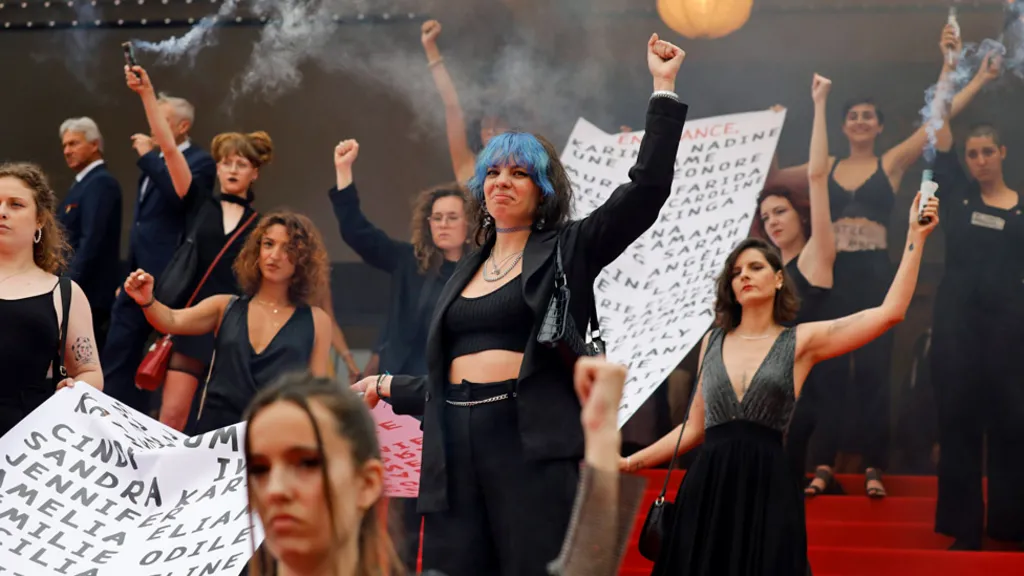
Xie, Xuan, and Vazrapu argue that women and minority filmmakers continue to be systematically marginalized in directing and leadership roles. Even through the years of advocacy, there still remains a lack of diversity and there continues to be men that hold positions in hiring, funding and distribution. Using research from recent studies, there is an underrepresentation of female and minority directors. Additionally, it is seen that the audience wants more diverse representation and stories, despite Hollywood’s slow change. This resource is important to the conversation as it takes in cultural criticism from audiences. This frames the importance of shedding light on female and minority directors as an economic issue. In relation to our research project, this is important because it goes beyond the lack of diverse representation in films, but shows the outstanding impact it may make on audiences. With this source, we may be able to dive into the long-lasting effects of diverse films on the audience and how the films may resonate, connect, and represent many communities.
2. Bielby, D. D., & Bielby, W. T. (1996). Women and Men in Film: Gender Inequality among Writers in a Culture Industry. Gender & Society, 10(3), 248–270. https://doi.org/10.1177/089124396010003004
Bielby and Bielby assess the impact of gender discrimination on Hollywood film by studying the experiences of screenwriters. Through an application of sociological frameworks and statistical data, the authors demonstrate how an informal hiring process, a professional reputation system, and the assumption that creativity is inherently masculine work to slow their progress in the industry. Their analysis shows that women are not only underrepresented in writing roles, but make significantly less money on average than men, and cede the most prestigious projects to men. The authors argue that this inequality is not simply a byproduct of women’s lower ability or ambition in an even labor market, but occurs due to institutionalized norms and power structures the film and television industry operates within. The authors characterize the film industry as a “culture industry,” where personal connections and subjective judgements write women out from opportunities, and in the process, reinforce gender inequality. The article provides a broad perspective on systemic barriers to women writers and the work creative professions do to sustain and correspond to social hierarchies. It provides observation-based evidence to demonstrate that gender impacts professional development and creative ownership in film-making.
3. Ehrich, Martha E., et al. “The Film Festival Sector and Its Networked Structures of Gender Inequality.” Applied Network Science, vol. 7, no. 1, 20, 2022, https://doi.org/10.1007/s41109-022-00457-z.
Ehrich and her coauthors examine how gender inequality operates structurally within the global film festival sector, which is an influential subfield of the film industry that shapes cultural prestige, visibility, and opportunity. Rather than focusing on individual experiences or representation alone, the authors employ social network analysis to quantify and visualize how films circulate among 1,523 international festivals, connecting 1,323 films based on the gender composition of their “core creative teams” (directors, writers, and producers). They categorize films as created by women-only, men-only, or mixed gender teams and then trace how these gendered groups move through the festival network. Their findings reveal that network connected through women-only films is much sparser and less interconnected than the one connected through men-only films, suggesting that male-dominated projects enjoy broader visibility and mobility. For our thesis, it helps explain how institutional power and visibility are reproduced through a distribution network, illustrating that women’s limited presence behind the camera is sustained by the structural design of the festival system itself rather than by individual choice.
4. Erigha, M. (2015). Race, Gender, Hollywood: Representation in Cultural Production and Digital Media’s Potential for Change. Sociology Compass, 9(1), 78–89. https://doi.org/10.1111/soc4.12237
Within this article, Erigha argues that the U.S. Hollywood film industries remain largely dominated by white men, minimizing women and minority communities’ impact in both on-and off-screen roles. Erigha reviews Hollywood film characteristics such as production, employment, and technology, showing a trend of long-term disparities. She also relates these disparities to looking into how digital media and new production/distribution technologies can offer potential avenues for change. This resource is significant because it gives us an overview of both structural inequalities in media production and potentially emerging shifts brought by digital platforms. Such advancements can be seen as a counter-argument into how disparities can be overlooked, connecting theory, industry data, and technological change to new beginnings. Examining our research on gender inequalities and film production, Erigha’s work gives us some foundation, outlining the broad structural landscape of race and gender bias in Hollywood. She also identifies digital media as one major possible means of disruption, allowing us to depict the barriers and possible strategies for marginalized directors within a continuously developing industry.
5. Goldfarb, Sophie. “The Effect of the Underemployment of Female Filmmakers in the Industry on Aspiring Female Filmmakers ages 14-19 in South Florida.” Journal of Student Research, vol. 12, no. 3, 2023, https://www.jsr.org/hs/index.php/path/article/view/4502/2153
Goldfarb explores how the underemployment of female filmmakers negatively affects aspiring female filmmakers between the ages of 14-19 in South Florida. There is male-dominated trend in the film industry– there is a known gender imbalance of directors, producers, writers and cinematographers. By the use of self-reported surveys, Goldfarb explores how young female filmmakers who observe the underemployment may feel discouraged, see less opportunities, or believe there is little to no place for them in the creative industry. Although the sampling only took place in South Florida, limiting the ability to generalize responses, there is still a jarring consensus– 100% of participants reported they were aware of underrepresentation and 66.7% of participants reported to be negatively affected by the underrepresentation. This research remains important and I believe that this is a great starting point for research that is more global and can be generalized as it studies the effects on aspiring young filmmakers, rather than those in the film industry currently. In relation to our research project, I feel this source is important for determining the long-standing consequences in the film industry and the possible long-standing effects to the youth including but not limited to unemployment, psychological and social outcomes.
This source argues that between the almost ten-year period (2007-2016), there has been little to no change in hiring women or people of color (POC) as film directors in major Hollywood studios. White male directors have been dominating our screens across the top 100 grossing films of each year while female, Black or Asian directors have been severely marginalized. The authors claim that the industry has failed to produce significant improvements for POC and women filmmakers through systemic exclusion. Using the quantitative analysis of the top 1,000 films between 2007-2016, researchers examined the demographics among directors– only 4% of directors across the almost ten year sample were women, 95.7% of films were directed by white men, and only 3 Black female and 5 Asian female directors in the whole dataset. It did not seem to have made any progress over the years. This source is very important as it generalizes to the top Hollywood industry directors, showing how structural discrimination continues despite talks to create a more diverse community of filmmakers. It seems that POC and women are not only the minority, but lack opportunities to make it big as a Hollywood filmmaker. In relation to our research project, this source strengthens our arguments of a divided industry around film, especially between top movies in Hollywood. This source highlights the power imbalances that happen throughout almost every industry, but shows how racial and misogynistic ideologies continue to affect the creative film industry despite moves to create a more inclusive community.
7. Karniouchina, E. V., Carson, S. J., Theokary, C., Rice, L., & Reilly, S. (2023). Women and Minority Film Directors in Hollywood: Performance Implications of Product Development and Distribution Biases. Journal of Marketing Research, 60(1), 25–51. https://doi.org/10.1177/00222437221100217
Within this article, Karniouchina et. al. argue that performance differences between women or minority directed films and those by male non-minority directors are mainly due to biases within selection, budgeting and distribution, rather than innate characteristics. The article examines a dataset of 2,386 U.S. broadly-released movies from 1994-2016, experimenting with a two-stage model. The model controls for project assignment, production budget, and distribution screens, while also conducting matched-sample analyses. These analyses are helpful to reflect real differences related to each variable being studied, without other outside factors contributing. This resource is important because it shows empirical evidence of systemic gender and racial bias in the Hollywood film industry through controlled analyses. Specifically, the evidence identifies racial biases in production and distribution phases, rather than just giving descriptive statistics. When looking at the impact of gender differences in film directors in widespread movies, this article does a good job at providing quantitative evidence supporting the claim that barriers occur before films even reach audiences. The article illustrates these findings through project assignments, budgets, and screens. Such evidence helps structure our research, showing disparities are structural rather than purely market-driven. The article also provides a reference layout (selection + budget + distribution) that we can refer to when assessing case studies of individual directors.
8. Malinsky, Gili. “Hollywood’s Women Problem: Why Female Filmmakers Have Hit the Glass Ceiling: Despite Making up 50.8 Percent of the U.S. Population, Women Are Vastly Underrepresented in Hollywood, Comprising 17 Percent of Directors, Writers, and Producers. The Situation Is Dire.” The Daily Beast, 2015.
Malinsky investigates the persistent gender inequities within the U.S. film industry, focusing on the extreme underrepresentation of women in creative leadership roles such as directing, writing, and producing. Drawing on current statistics and industry reports, she observes that although women constitute over half of the U.S. population (50.8%), they make up only 17% of Hollywood’s directors, writers, and producers. Malinsky describes this disparity as evidence of a structural “glass ceiling” in Hollywood. A Hollywood that restricts women’s upward mobility and access to decision-making power despite growing visibility and public discourse around equality. For our thesis, it provides a real-world context that complements academic sources, demonstrating how media industries, like corporate boards and festivals, replicate patriarchal structures that restrict women’s creative authority and access to power.
9. Moraka, Nthabiseng V. “Breaking the Glass Ceiling: Unveiling the Talent Management Gap in Boardrooms and Its Impact on Low Women Representation.” International Journal of Research in Business and Social Science, vol. 12, no. 8, 2023, pp. 119–33, https://doi.org/10.20525/ijrbs.v12i8.2895.
Moraka investigates why women remain significantly underrepresented on corporate boards worldwide, despite decades of advocacy, policy reform, and economic arguments supporting gender diversity. The conceptual article integrates talent management theory with corporate governance, human resources, and gender studies to reveal the structural, psychological, and social mechanisms that reinforce the “glass ceiling”. Moraka argues that the conversation around women on boards has largely focused on compliance and representation quotas rather than on developing and retaining female talent. The article thus reframes women’s underrepresentation as a talent management gap that is rooted in ineffective recruitment pipelines, limited leadership development, and the absence of strategies to retain women in executive roles. For our thesis it provides a theoretical framework for understanding institutional barriers in leadership and decision-making spaces, helping connect the broader issue of women’s exclusion in film, politics, and business to shared organizational patterns that limit advancement.
10. Mills Cox, B., & Goodman, J. M. (2024). Race, romance, and Hollywood: Black women filmmakers and the cultural production of Black love. Critical Studies in Media Communication, 41(3), 238–252. https://doi.org/10.1080/15295036.2024.2383181.
Cox and Goodman utilize Black Feminist Thought as an approach to consider Black women filmmakers’ challenge of Hollywood’s long history of misrepresenting Black relationships. Through thematic analysis of The Photograph (Stella Meghie, 2020), the authors assert that the films create new visual and emotional vocabularies for “Black Love” that disturb images of dysfunction and hypersexualization. Importantly, it reveals that aspects of visual and sound design embody care, vulnerability, and joy in relation to Black women’s love as a site of empowerment and resistance. Moreover, the texts situate works within the legacy of filmmakers such as Julie Dash and Gina Prince-Bythewood, illustrating how Black women’s cinematic interventions shift romance from personal to social and political relevance. This text is relevant to projects that consider representation, gender and power in the media, as it links concepts of film form to the outside social theory and showcases how Black women authors and artists understand authorship and cultural ownership in the context of mainstream film.
Within Anne O’Brien’s Women, Inequality and Media Work (2019), she examines the gendered nature of labor within the media industry. Her argument is rooted in the media being structured around systematic inequalities that strongly disadvantage women in the field. She pulls interviews and case studies to highlight how women face barriers such as inconsistently being able to hold onto employment opportunities, discrimination in hiring practices, as well as limited career progression. The book challenges the perception that media careers operate on merit alone. O’Brien emphasises that structural and cultural norms continue to reinforce gendered hierarchies across media organizations.
This book is tied to other research that enhances its credibility and provides a lens analyzed through qualitative data, making it valuable for academic exploration within the fields of gender and entertainment. O’Brien’s focus on genuine industry experiences enhances the book’s reliability and demonstrates the impact it has on real women within the entertainment industry. The strong combination of theory and case evidence makes for a strong academic source.
This source supports our guiding goal of finding a correlation between gender inequality and the entertainment industry. This book will provide a strong guide as we explore systematic inequalities, particularly in the hiring area of the entertainment industry, and how women face a significant disadvantage.
12. Pruchniewska, Urszula M. “Branding the Self as an ‘Authentic Feminist’: Negotiating Feminist Values in Post-Feminist Digital Cultural Production.” Feminist Media Studies, vol. 18, no. 5, 2018, pp. 810-824. https://doi.org/10.1080/14680777.2017.1355330.
Pruchniewska examines the ways women engaged in digital media, especially feminist bloggers, podcasters, and creators, navigate their feminist values in a culture that prizes self-promoting and commercially viable authenticity. Based on interviews with eleven feminist digital producers, she claims that women engage in “authentic feminism” not only as a value in their personal life, but also as a branding strategy; integrating activism and entrepreneurial self-presentation. This type of hybrid identity expresses the contradictions of a post-feminist media culture where empowerment and individualistic success stem from capitalist pressures and expectations of continuous visibility. Pruchniewska illustrates how creators in this culture negotiate the ethics of collective feminism and neoliberal work where feminist practice ultimately becomes redefined by brands for commercial viability yet still retains political significance. This article has considerable value for evaluating how women in entertainment and media production are required to negotiate identity, power, and authenticity over and over again. The article also complements existing literature on women filmmakers and media practitioners by addressing feminist practice as an extension of cultural production within a larger digital economy. Pruchniewska’s thoughtful approach makes visible the labor of retaining feminist integrity based on how industries commodify identity.
13. Wilk, K. (2024). Feminist Film Theory: The Impact of Female Representation in Modern Movies. Studia Humana (Rzeszów), 13(4), 13–22. https://doi.org/10.2478/sh-2024-0021
Within this article, Wilk does acknowledge that films directed by women do show higher percentages of female characters and crew members, but he argues that they still face major budget and box-office disparities compared to male-directed films. Wilk’s study uses a comparative analysis of the top five highest-grossing live-action films of 2018 directed by men versus films directed by women. This study is important to our research because it provides empirical evidence connecting director gender to on-screen representation and structural industry inequities in American films. This distinction correlates to Karniouchina et. al.’s article discussing structural biases within different gender-produced films. When looking at the impact of gender differences in film directors in widespread movies, Wilk’s research identifies both a conceptual framework and concrete data showing that women directors generate higher female representation yet remain disadvantaged in the structural production of films (resources and distribution). This is important to highlight within our research in order to show how systematic biases may promote gender inequalities and barriers within the film industry.
Timeline Image Sources: